
Blog · Native mobile apps
Native iOS and Android App Development
CodeLoop Studio · · Updated
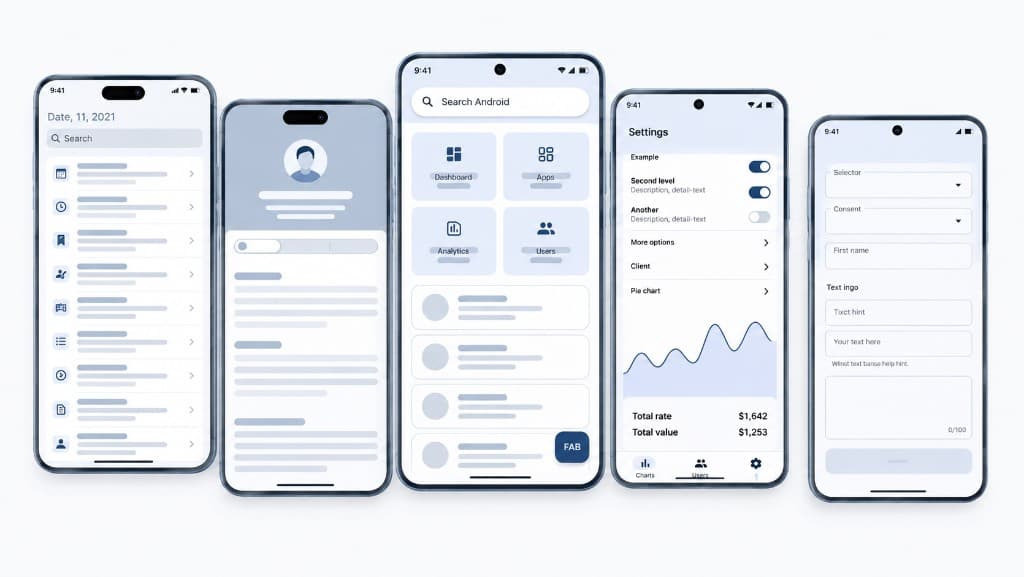
Cross‑platform frameworks like Flutter and React Native are powerful, but there are many situations where native iOS and Android development is still the best choice. At CodeLoop Studio we build native apps using Swift / SwiftUI and UIKit for iOS, and Kotlin / Jetpack Compose and Android XML for Android.
In this article we look at when native mobile apps make sense, what benefits they bring, and how they compare to cross‑platform alternatives from a business and technical perspective. Our native mobile service is the delivery page if you already know you need Swift and Kotlin rather than a shared UI toolkit.
What “native” really means
Native apps are built with the official languages and frameworks provided by Apple and Google. On iOS this means Swift (and sometimes Objective‑C) with SwiftUI or UIKit. On Android this means Kotlin (and sometimes Java) with Jetpack Compose or classic Android XML layouts.
Because native apps use platform SDKs directly, they get the latest capabilities, performance improvements, and design patterns as soon as they are available from Apple and Google.
Benefits of native iOS and Android apps
Maximum performance. Native apps can take full advantage of the device CPU, GPU, and memory. This is especially important for graphics‑heavy apps, real‑time features, or apps that must feel extremely responsive.
Best possible UX. Native apps follow platform design guidelines (Human Interface Guidelines on iOS, Material Design on Android) and use native controls, which leads to a familiar and intuitive experience for users.
Deep access to device features. Camera, sensors, background tasks, push notifications, payments, and platform‑specific APIs are easier to integrate and maintain when you work natively.
Long‑term stability. Native code tends to age more gracefully because it evolves with the platform itself. You reduce the risk of depending on third‑party bridges that can become outdated.
When native development is a strong fit
You're building a high‑stakes consumer app where performance, polish, and platform UX are critical (e.g. fintech, health, mobility, media).
You need strong offline capabilities, background sync, or complex native integrations.
You want to leverage the latest iOS and Android features as soon as they are released, without waiting for third‑party library support.
Security, compliance, or performance requirements push you towards the most direct integration with each platform.
Native vs cross‑platform: what to consider
Native development is not automatically better or worse than cross‑platform; it's simply a different set of trade‑offs. Cross‑platform can reduce time‑to‑market and code duplication, while native offers maximum control and alignment with the underlying OS.
When we work with clients at CodeLoop Studio, we look at your product requirements, budget, team, and roadmap. Sometimes the right approach is fully native. In other cases, a cross‑platform framework like Flutter or React Native is a better match—or even a hybrid strategy that mixes both.
How CodeLoop Studio builds native apps
Our team delivers native iOS apps with Swift, SwiftUI, and UIKit, and native Android apps with Kotlin, Jetpack Compose, and Android XML. We design the architecture around clean boundaries, testable business logic, and robust networking so your app is easy to maintain and extend.
Device-heavy products are where native (or a native-leaning stack) earns its keep. WoodMeter is a lumber-measurement app: camera, measurement logic, and field use, not a marketing shell. That class of work is why we still staff Swift and Kotlin as first-class skills.
We also help with App Store and Google Play submission, analytics integration, crash reporting, and long‑term maintenance plans so your native apps stay healthy after launch.
Need help deciding on native vs cross‑platform?
If you're not sure whether native iOS and Android apps or a cross‑platform solution are right for your product, we can help. CodeLoop Studio will analyse your use cases, required integrations, team skills, and timeline, then propose a realistic technical approach.
Contact us and we'll schedule a short call to discuss your mobile app idea and the best stack for building it.