
A software company should build as much of its own software as it can carry. Client work pays the studio. Own software is the only place the studio sits on both sides of the release: the people who wrote it, and the people who have to live with the price, the review note, and the Tuesday after launch.
CodeLoop Studio in Sarajevo does both. The commercial work is custom software for other teams. The own work is the proof that the same people can take an idea from a blank repo to something a stranger can open. The paid example is RoomFit. The path from zero to that price is a separate note.
Three layers, not a slogan
“As much as possible” is a pile of concrete software, in this order.
- Tools the studio runs on. Loopy, the online estimate, is ours. A founder answers a short questionnaire and gets a ballpark by email. We feel every awkward question because we are the ones who have to answer the reply.
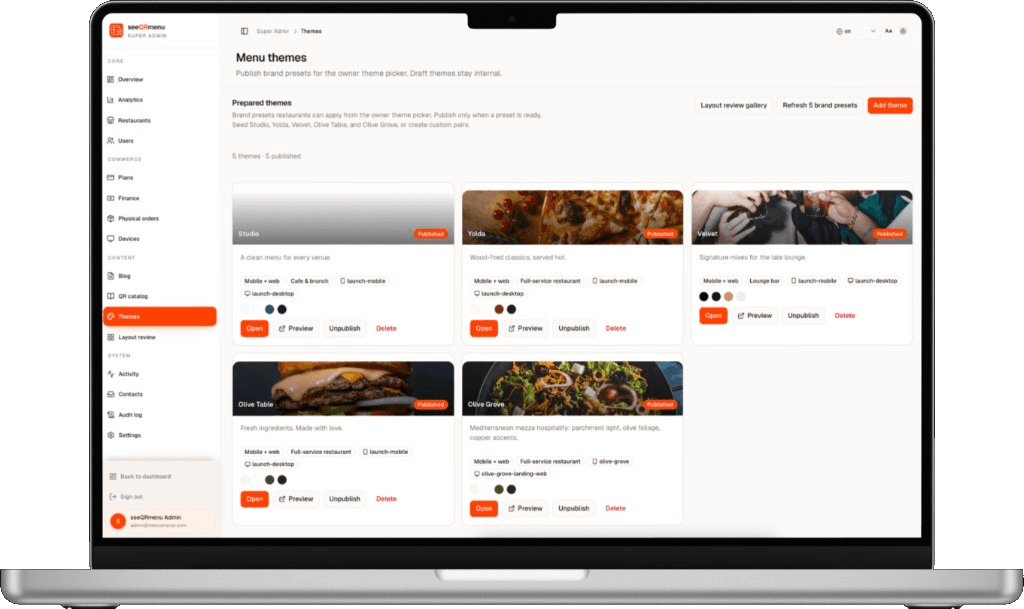
- A product we still operate. seeQRmenu is a phone menu for restaurants and a dashboard for prices, photos, and dishes that are off tonight. We designed it, built it, and still run it. A manager changes a price without a reprint. That is a product with a job, not a demo that ends when the invoice does. The restaurant note is QR menu ROI.
- One product a stranger can pay for. RoomFit is an iOS app for true-size furniture preview. The store offers €24.99 a year or €59.99 once. Those numbers are on the pricing note, not a slide we made up for this post.
What you only learn as the owner
Hours sold to a client teach delivery. They do not teach what happens when the paywall is yours.
Store review sends the build back for a sentence on the paywall. A lifetime purchase and a subscription have to resolve to the same question: what is this person allowed to do right now. Support mail arrives on a Sunday because the sofa preview is wrong in a room we have never stood in. None of that shows up in a sprint report written for someone else’s backlog.
A studio that has felt those weeks scopes client work differently. The first version is a job a stranger can finish — the same cut we describe in MVP first version — because we have watched a wide “platform” stall on our own roadmap.
Build the software you sell
The rule is the product surface you claim to deliver: mobile apps, web apps, the path from a brief to a store or a URL. It is not a request to rewrite email, accounting, or card payments. Stripe, a bank, and a mailbox already exist. Rebuilding them is a hobby with a burn rate.
Own software also has a ceiling. We keep the list short, ship the ones we will still open in six months, and let client work stay the larger share of the week. The point is repetition of the full loop, not a catalogue.
What to ask a studio
If you are hiring people to take your idea from zero to something that can charge, ask what they ship when the invoice has their own name on it. A case study of a client site is useful. A product they still maintain, with a price a stranger can pay, is the stronger sample.
That sample, for us, is seeQRmenu on the table and RoomFit on the App Store. The delivery shape — one job, a store or a URL, a price, then the version after the first sale — is written out in from an idea to a product that earns. A written range for your own brief comes back within 24 hours from the online estimate.